Wall Painting
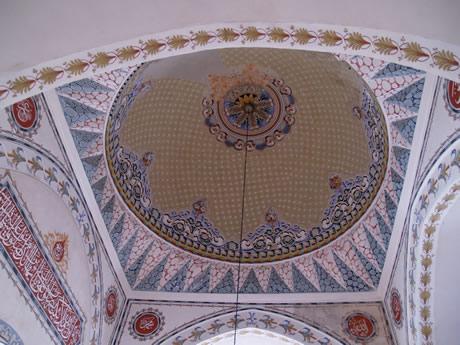
This partially restored dome in Edirne, Western Turkey, shows the geometric challenge of painting domes – the simple dot design unfortunately has a few mistakes (right of centre). [C.P.4]
This partially restored dome in Edirne, Western Turkey, shows the geometric challenge of painting domes – the simple dot design unfortunately has a few mistakes (right of centre). [C.P.4]
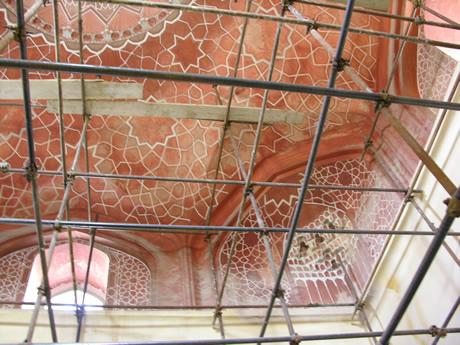
This photograph shows how the design concept in the dome at Torbat Heydarieh extends down the walls, with muqarnas (stalactite vaulting) effects in the corners. [C.P.3]
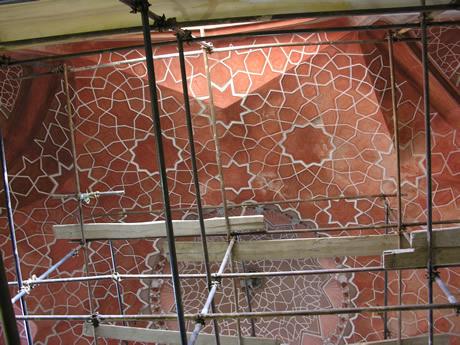
Here is some closer detail of this Timurid masterpiece, up above the scaffolding. [C.P.2]
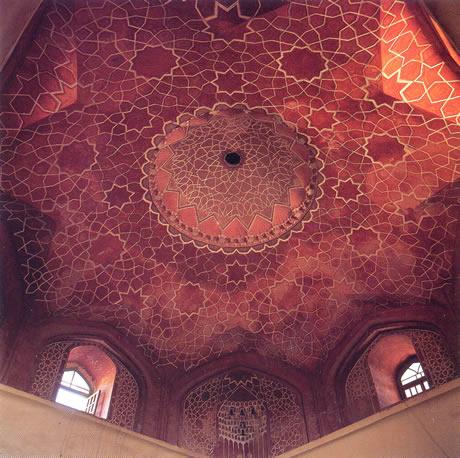
This stunning geometric tour-de force of Timurid wallpainting is in Torbat Heydarieh, in NE Iran. The eight-pointed star ‘floating’ on the ceiling is covered with interlaced 5, 6 and 8-pointed stars, and there is a perfect 16-pointed star in the small central dome. [C.P.1]
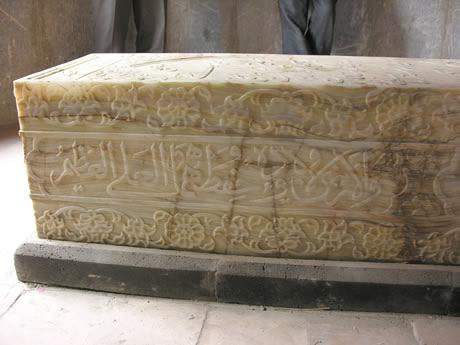
Here is a memorial completed, after two years work, by the stone-carving ustad shown in the other photographs. It is simply gorgeous, but normally languishes under a grubby green baize cloth in a small, dark and locked shrine. However, my ustad friend proudly took me on a trip to let me admire it. [C.S.5]
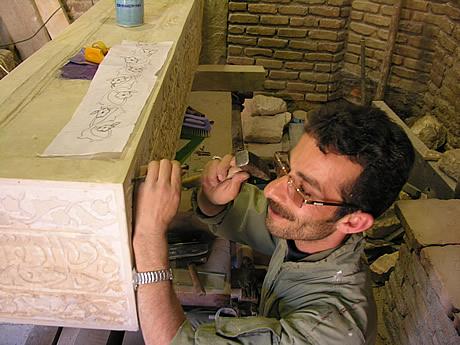
This photograph shows exactly how the ustad grips his chisel (screwdriver blade) and hammer. This requires strong and flexible fingers – I got tired and stiff, when I tried for a few hours. [C.S.4]
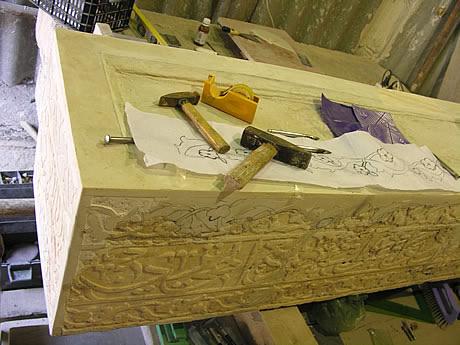
These are the most important tools of the stonemason restorer: the paper design copied or derived from motifs left on the memorial; adhesive tape and carbon paper to help transfer patterns; various hammers; and screwdriver blades for use as chisels. The design has been traced onto the ‘artificial stone’ on the top of the memorial, …
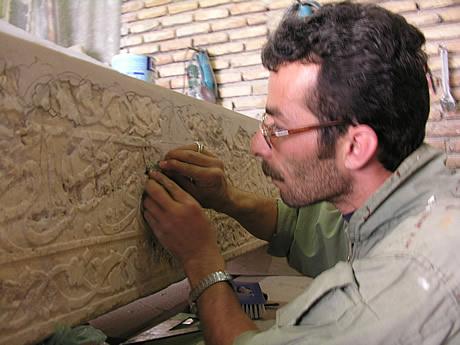
Here, the ustad (master craftsman) is adding more small pieces of the ‘artificial stone’ to smaller defects in the memorial. Unusually, this ustad is a young man – most are much older, and the limited interest from younger apprentices means that many traditional skills are at risk of being lost. [C.S.2]
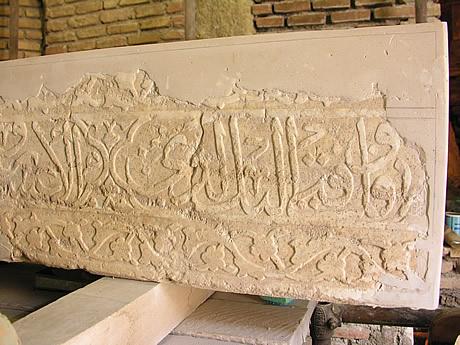
This damaged stone memorial, in Ardabil, is being restored by one of only seven appropriately skilled stone-carvers in Iran. He first makes ‘artificial stone’ (top and corner), using ground up stone similar to the original, plus various stabilisers. [C.S.1]
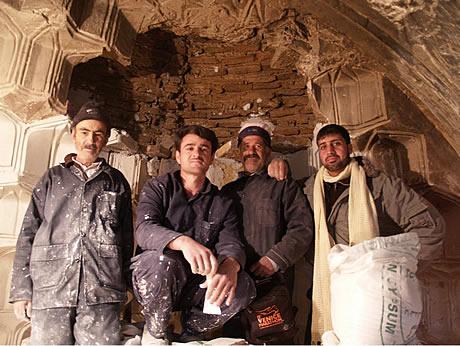
Here is the whole team responsible for restoring themuqarnas (behind them). The ustad (master craftsman, at left) told me that, unusually, he expected the two younger apprentices to continue working with him – more often now, young men do not stick to low paid and arduous craft jobs. [C.M.4]