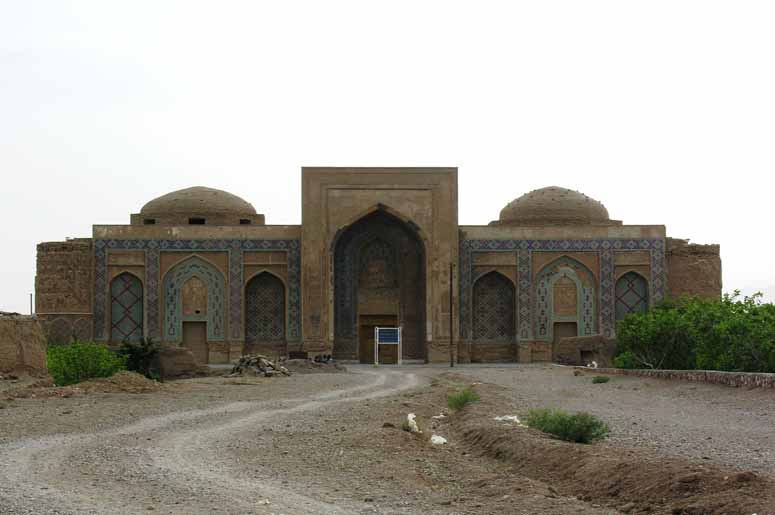
Brick Making
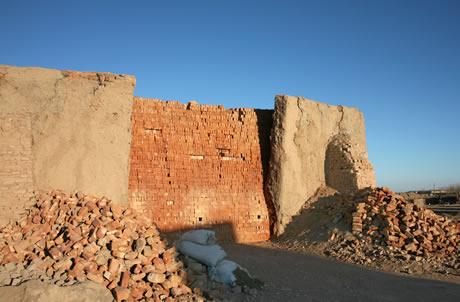
Here is a packed brick kiln. The red colour means that these bricks have been fired. The clay walls of the kiln, buttressed by bricks, are used and re-used. [C.B.2]
Here is a packed brick kiln. The red colour means that these bricks have been fired. The clay walls of the kiln, buttressed by bricks, are used and re-used. [C.B.2]
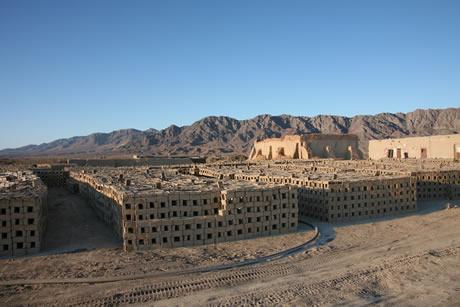
Although many buildings in Iran are built of mud or mud-bricks; baked or burnt bricks have been made from at least the first millennium BCE. The bricks stacked here are drying out after being moulded in simple wooden frames. A full brick-kiln is at right back, cooling off. [C.B.1]
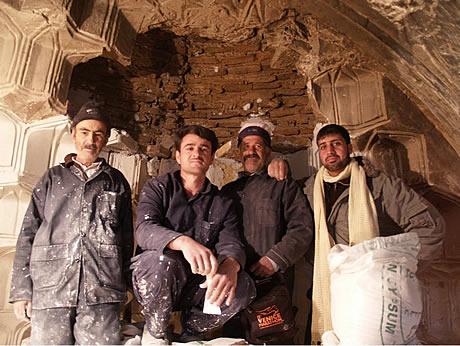
As I started to visit buildings in Iran, I started to meet Iranian craftsmen – often high up on rudimentary scaffolding. I also started to realise how little is understood about their impressive skills and knowledge. With many master craftmen (ustads) relatively old, and relatively few young men now wanting to undergo the lengthy, often …
The Text Archive of Persian Classical literature: http://persian.minoh.osaka-u.ac.jp/~archives/tapcl/tapcl_eng.html Baroness Marie-Thérèse Ullens de Schooten Archive slide collection has been digitized by The Fine Arts Library and the Aga Khan Documentation Center at Harvard University and is now available on-line. Over 4,600 images are freely accessible in Harvard’s Visual Information Access (VIA),http://via.lib.harvard.edu/<http://www.facebook.com/l.php?u=http%3A%2F%2Fvia.lib.harvard.edu%2F&h=7AQEa0ufU&s=1 New report on Damage to …
This second film (with sound) focuses on the ceramic tiles in the building, especially the unique 12-pointedcuerda seca star tiles.
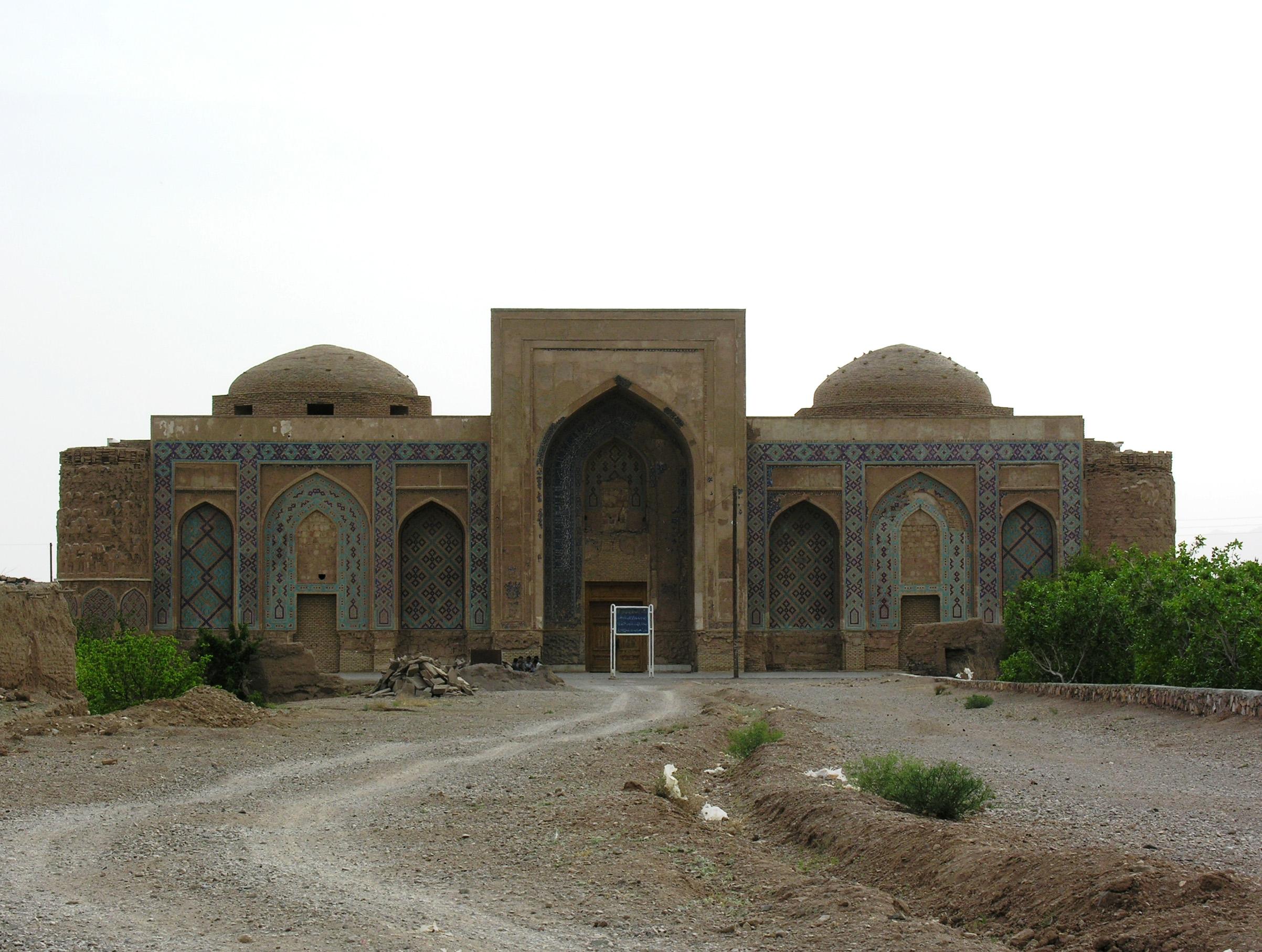
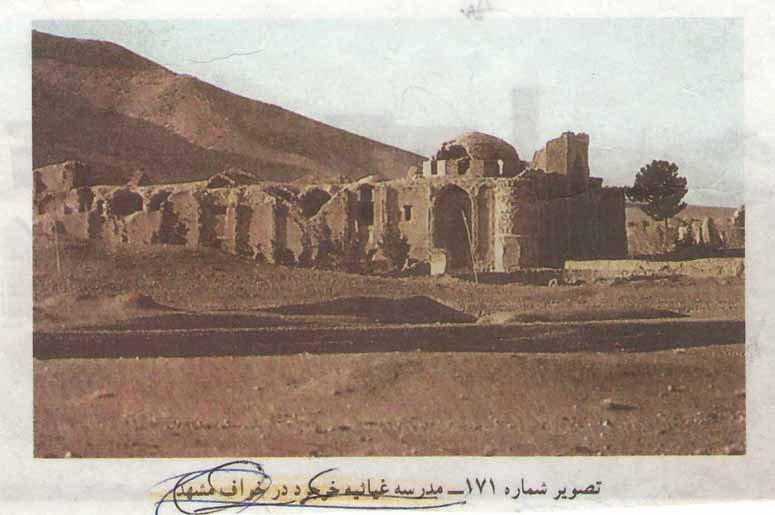
These two short films (both with sound) explore the Ghiyathiyya Madrese at Khargerd in NE Iran. The madrese (religious school) was constructed in 1438-45 and is a showpiece of Timurid decorative art: with six different sorts of tiles, some elegantly geometrical wallpainting and amazing plaster effects in the muqarnas (stalactite vaulting).
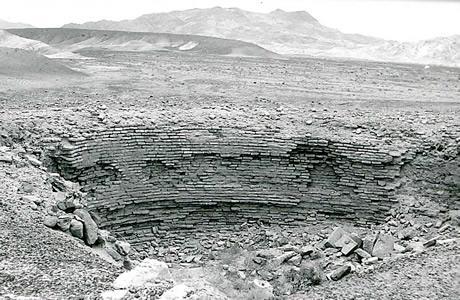
The complex water system includes several large water ‘tanks’ – as shown here, in the 1970s. Now, the base of this tank has been cleared, revealing larger paving stones. [SA.M.14]
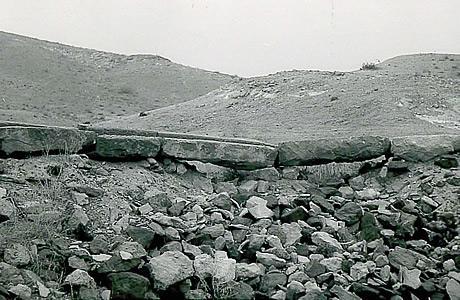
Qasr-i Bahram and Haramserail are both watered by a 10km overground canal, a segment of which is shown here, in this 1970s image. [SA.M.13]