Siahkuh and Haramserail
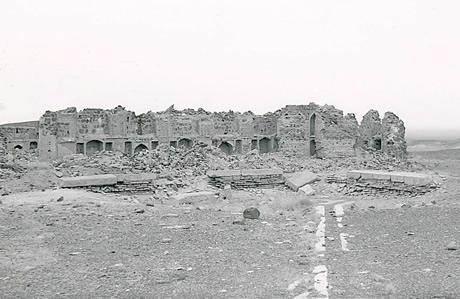
These parts of the Haramserail, shown here in the 1970s, are now in worse condition. Again, elements of the water supply system can be seen. [SA.M.12]
These parts of the Haramserail, shown here in the 1970s, are now in worse condition. Again, elements of the water supply system can be seen. [SA.M.12]
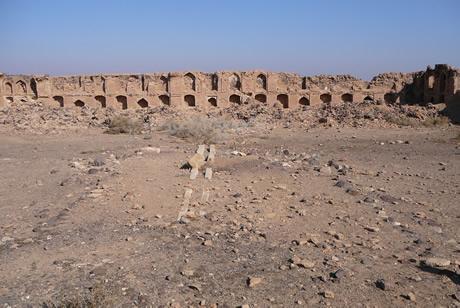
This modern photograph shows how much of the (unrestored) Haramserail is holding up well in the harsh desert conditions. Some small areas of fancy plaster are still visible, suggesting that it was originally decorated. [SA.M.11]
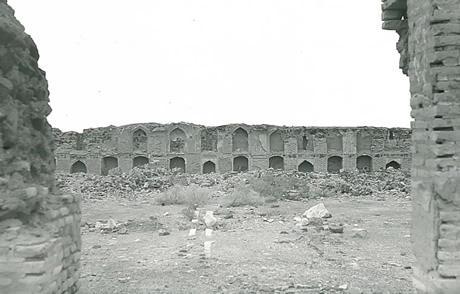
The Haramserail is said to have been the facilities for Shah Abbas’ wives and children, when he was hunting at Qasr-i Bahram. It is constructed from a mix of baked bricks and mud intermingled with large local stones, and the layout is completely unlike most other caravanserais. Here it is, in the 1970s. The central …
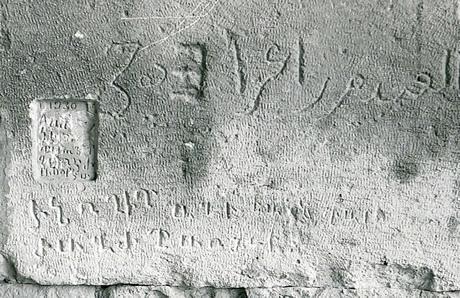
This image shows other marks in the stone, perhaps made in 1930. I have not been able to definitively decipher all of this, but would welcome any suggestions. [SA.M.9]
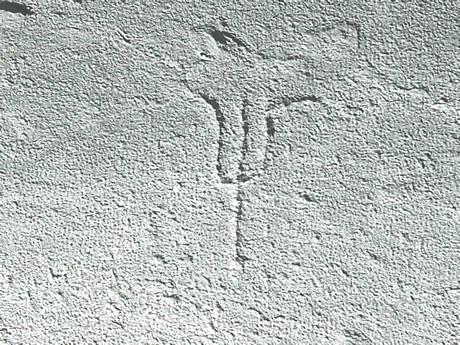
Morton photographed some of the many stonemasons’ marks. These are still visible now. Kleiss has recorded fourteen different marks. Although it is not clear if these are quarrying or builders’ marks, they still make a distinctive connection with a small group of non-elite men from 400 years ago. [SA.M.8]
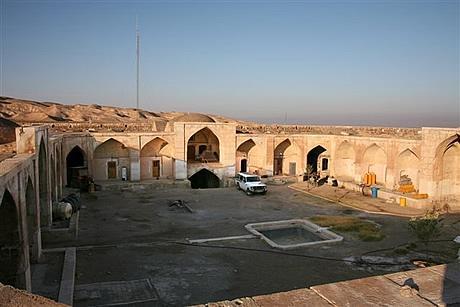
Qasr-i Bahram is now used as a work-base for rangers working in the restricted-entry Kavir National Park. This modern photograph shows the northwest iwan, with the (restored) arched entry to the underground stabling. [SA.M.7]
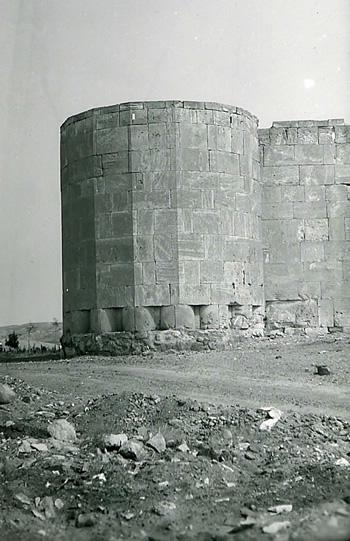
The elaborate eleven-sided corner towers and stone walls, seen here in the 1970s, are still now in relatively good condition. When he visited, Morton found what seemed to be the local quarry for the stone. [SA.M.5]
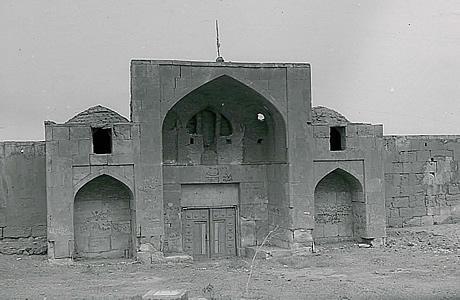
This is the ‘back’ entrance of Qasr-i Bahram in the 1970s. The doors have been changed, and the small canal supplying water is now more visible, but otherwise this looks almost exactly the same now. [SA.M.4]
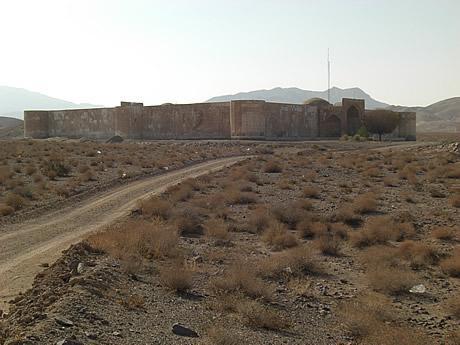
Qasr-i Bahram, as the building is now called locally, is still stunning. Local experts say it was built as a hunting lodge for Shah Abbas. Graffiti recorded in the building in 1971 included a date of 1001AH/1592CE. Despite this, there is no record of Abbas stopping here when he passed in 1601 on the 1000km …
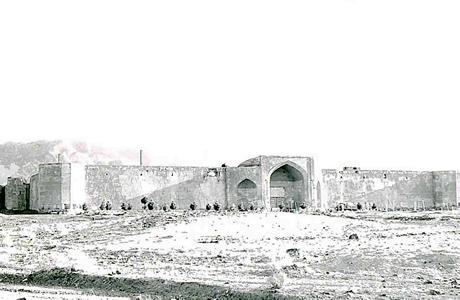
In 1628, Herbert described the “notable” caravanserai at Syacow, “which is built from the ground of good freestone, white and well polished, yea to the best of my remembrance . . this was the first building of this material I saw in eight hundred miles”. Here it is in the 1970s, when AH Morton visited. …